What We Found

These numbers tell a story; of awareness, silence, and change.
Each response reflects how generations have understood (or misunderstood) the Nikkah Nama, and how that understanding is slowly evolving.

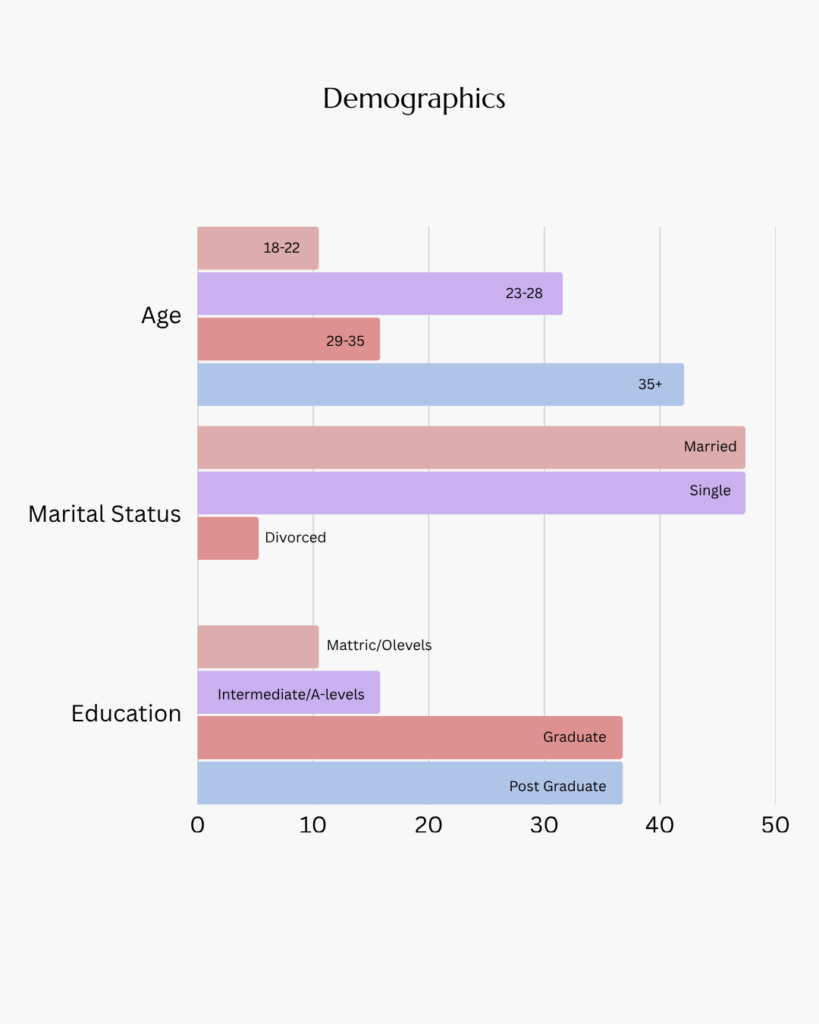
Our respondents represented a wide range of women from young adults to those who married decades ago. While most were between 23–35, there was a strong voice from women over 35, showing how this issue spans generations. Nearly half were married, and the majority were well-educated, a reminder that lack of awareness isn’t tied to education, but to silence and social habit.

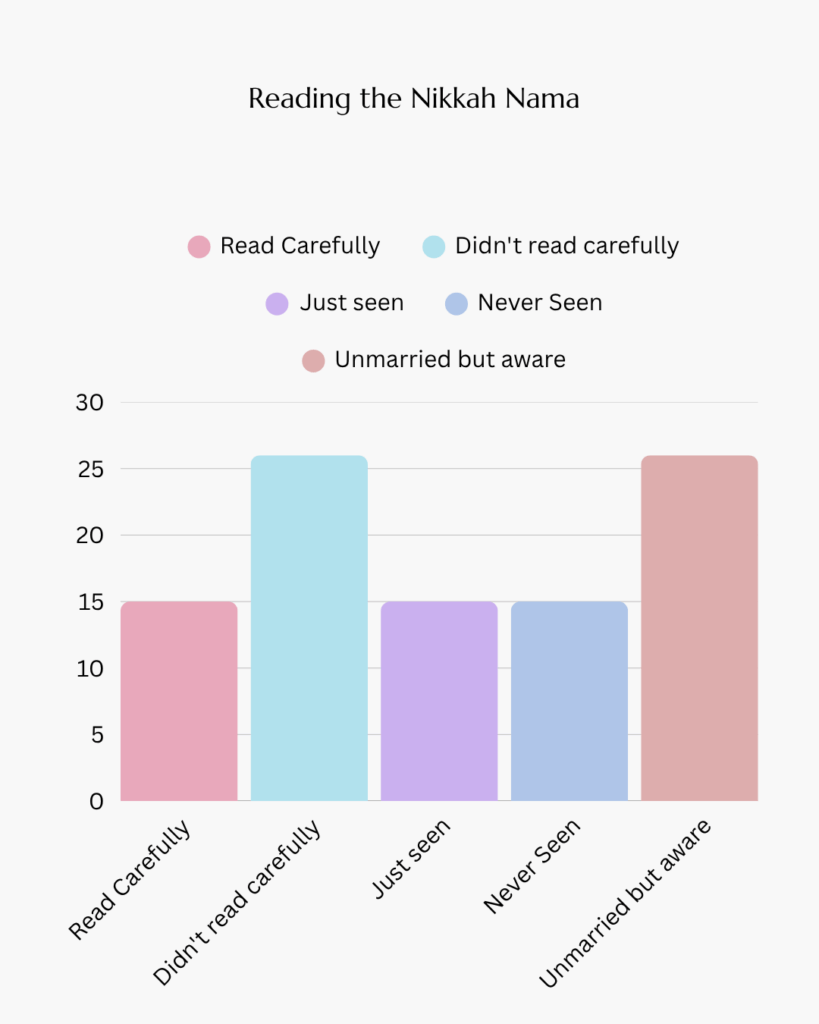
Only 15% of women said they read their Nikkah Nama carefully before signing. For many, the moment was emotional, rushed, or treated as a formality, not a document defining rights. Even among those unmarried, awareness often came later, through conversation or social media rather than family guidance.

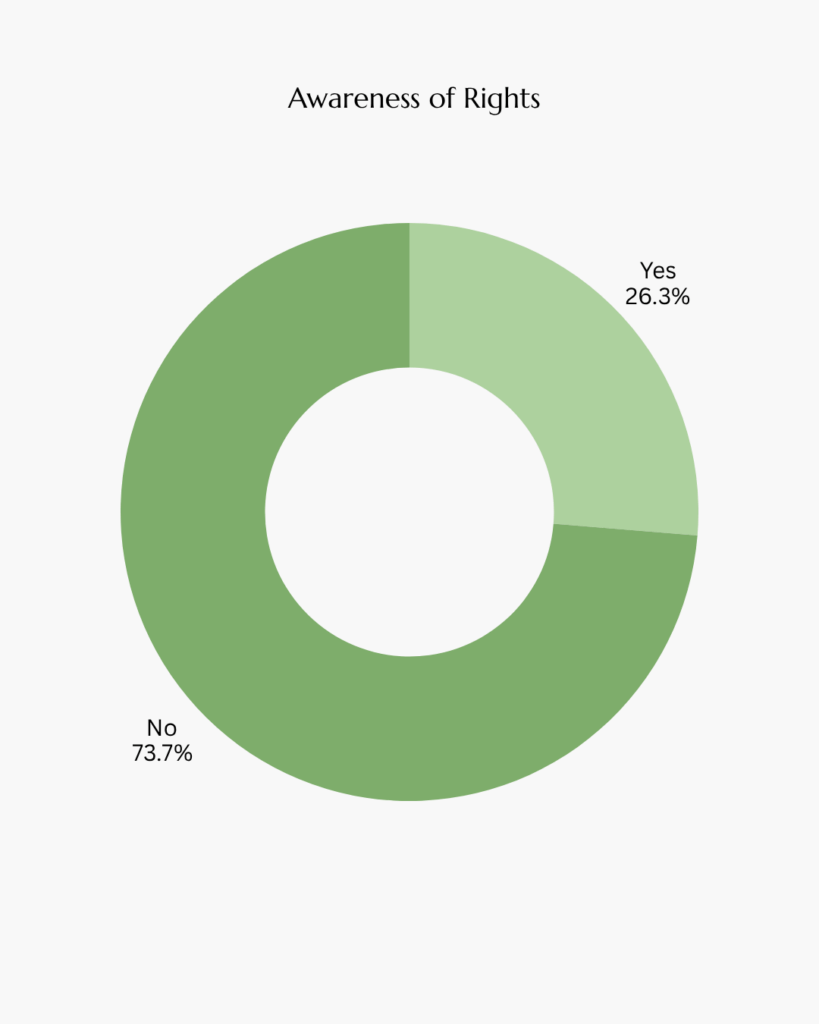
76% of respondents didn’t know they could add their own conditions to the Nikkah Nama.
These clauses are meant to protect women’s financial and personal autonomy, yet, most never learn this until much later, if at all. It shows how tradition often overrides transparency.

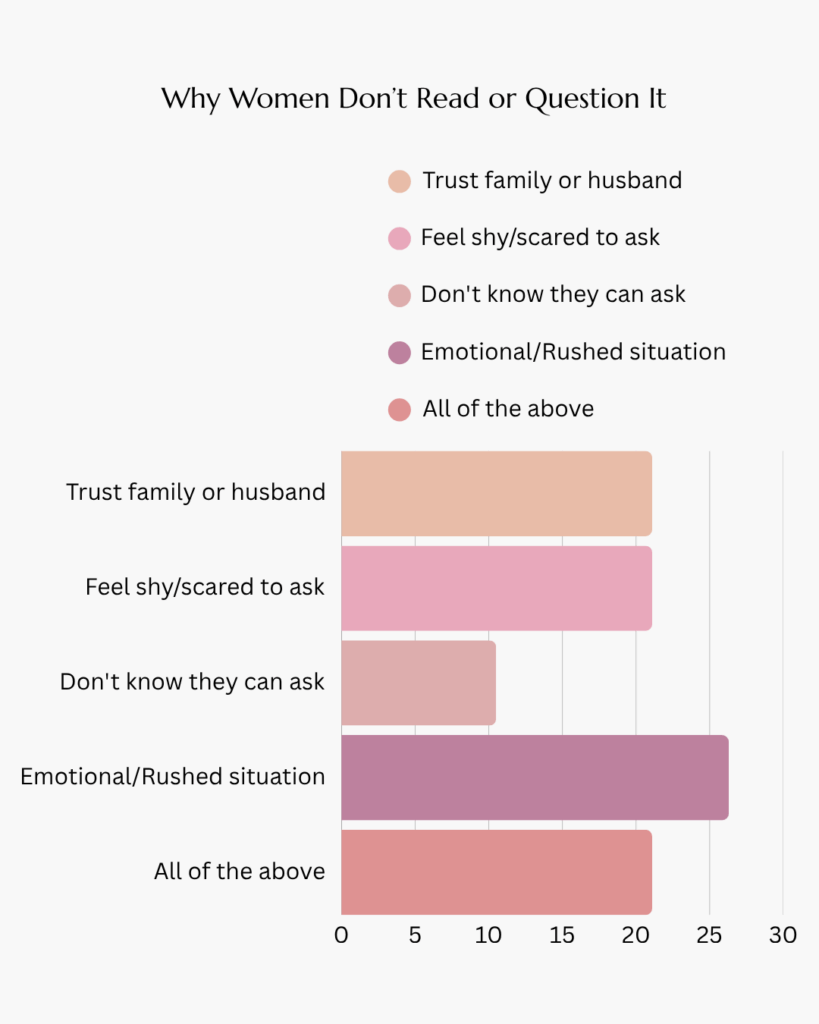
When asked why they didn’t read or question the document, most women cited trust, emotional pressure, or fear of being judged. Some said they didn’t even realize it was an option to ask.
The responses reflect how emotional and social conditioning shape silence — not lack of education or ability.